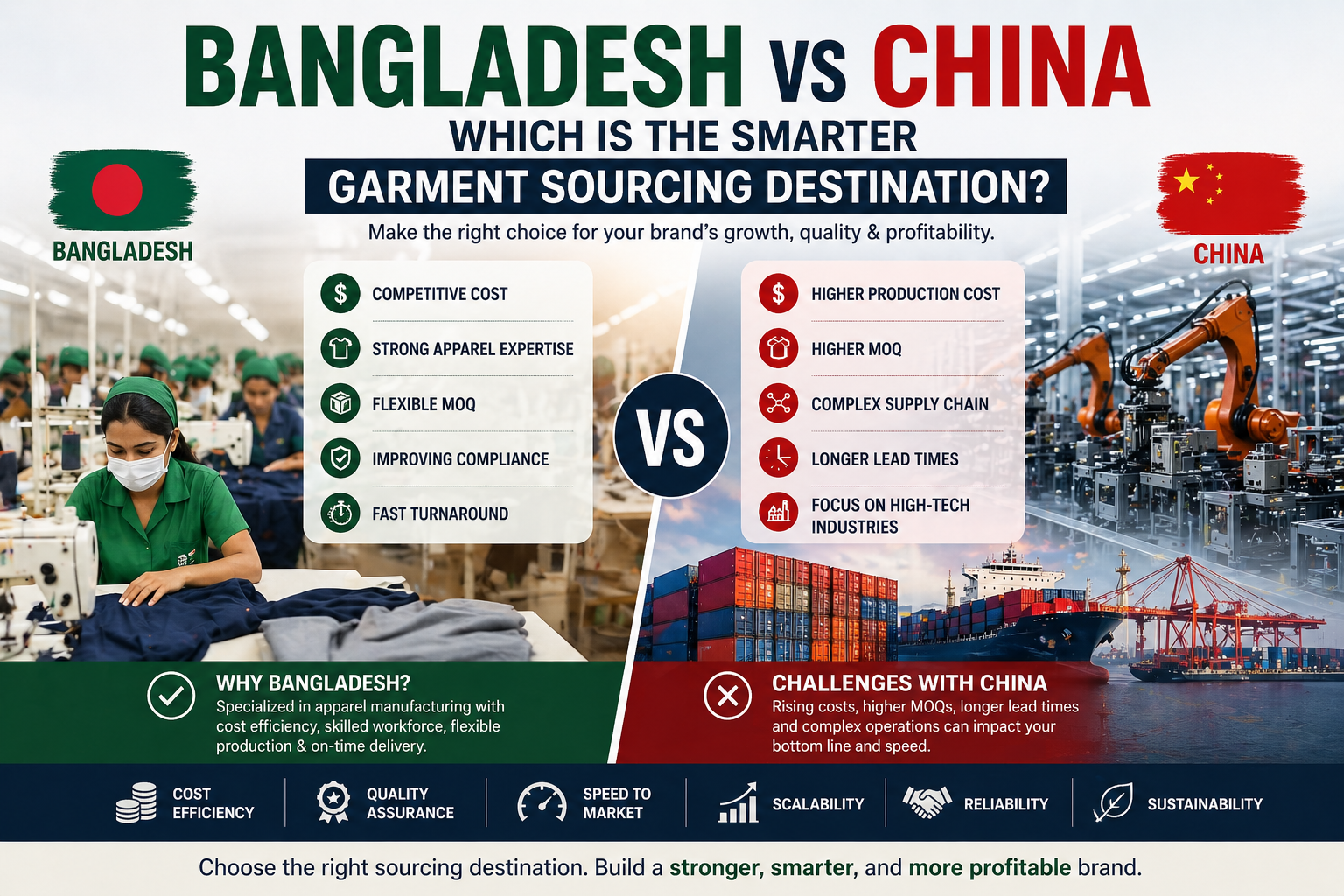


Bangladesh is the world’s second-largest garment exporter, and when it comes to knitwear specifically, no other country comes close. From premium hoodies and oversized fleece to seamless activewear and fine-gauge sweaters, Bangladesh produces over one billion kilograms of knit fabric every single year. For UK brands looking to scale efficiently, source ethically, and maintain healthy margins, Bangladesh continues to stand out as the most reliable and cost-effective sourcing destination in 2026.
Knowing where to source is only part of the challenge. Knowing how to do it properly is what separates brands that scale confidently from those that run into delays, quality failures, and costly mistakes along the way. This guide walks you through everything you need to know.
Why UK Brands Source Knitwear from Bangladesh
The shift toward Bangladesh is not new, but it is growing faster than ever. Major UK and European retailers, including H&M, Primark, and Next already source billions of pounds worth of knitwear from Bangladesh each year. Smaller and mid-size brands are now following suit, and with good reason.
Cost competitiveness. Bangladesh offers some of the lowest manufacturing costs globally without compromising on quality. Efficient factories, vertically integrated supply chains, and competitive labour rates mean UK brands can achieve strong margins even at lower order volumes. This is a structural advantage that rivals like India and Vietnam are unable to match at scale.
Zero import duty. Under the UK’s Developing Countries Trading Scheme, Bangladesh currently benefits from duty-free access on garment exports to the UK. This saves brands roughly 12 percent on standard knitwear tariffs, a saving that compounds significantly as volumes grow.
Deep knitwear expertise. Bangladesh has achieved approximately 85 percent vertical integration in knitwear manufacturing. Yarn spinning, knitting, dyeing, finishing, and sewing can all take place within a single integrated supply chain. This reduces lead times, lowers quality risk, and makes logistics considerably simpler for overseas buyers.
World-leading sustainability credentials. Bangladesh is home to more LEED-certified green factories than any other country in the world. For UK brands navigating the Modern Slavery Act, ethical sourcing requirements, and growing consumer expectations around sustainability, Bangladesh’s compliance infrastructure is a genuine and meaningful advantage.
What Types of Knitwear Can You Source from Bangladesh?
Bangladesh’s knitwear manufacturing has evolved well beyond basic cotton T-shirts. Today, UK brands can source an extensive and sophisticated range of knit products, including the following categories.
Core basics and polos. Crew neck tees, oversized tees, V-necks, long-sleeve tops, and polo shirts. Key fabrics include combed cotton, organic cotton, CVC, and slub knit.
Sweats and hoodies. Pullover hoodies, zip hoodies, crewneck sweatshirts, oversized styles, and cropped fits. These are produced in brushed and unbrushed fleece as well as French terry, and represent one of the highest-volume categories produced in Bangladesh today.
Bottoms and co-ords. Joggers, sweatpants, lounge pants, knit shorts, and full tracksuit sets with premium ribbing and comfort-fit construction.
Activewear and performance. Gym tanks, compression tops, seamless performance tees, yoga leggings, and training shorts. These are made from moisture-wicking, breathable, four-way stretch fabrics built for performance.
Thermal and innerwear. Thermal tops and bottoms, base layer sets, long johns, seamless boxers, undershirts, and briefs with anti-bacterial and moisture-control properties.
Sweaters and accessories. Crew and V-neck sweaters, cardigans, turtlenecks, beanies, scarves, and socks in high-value knitwear constructions.
If your brand works across multiple product categories, a strong Bangladesh sourcing partner can consolidate production across all of them under a single supply chain, reducing your administrative load and improving quality consistency across your range.
Step-by-Step: How to Source Knitwear from Bangladesh the Right Way
Step 1: Define Your Product in Detail
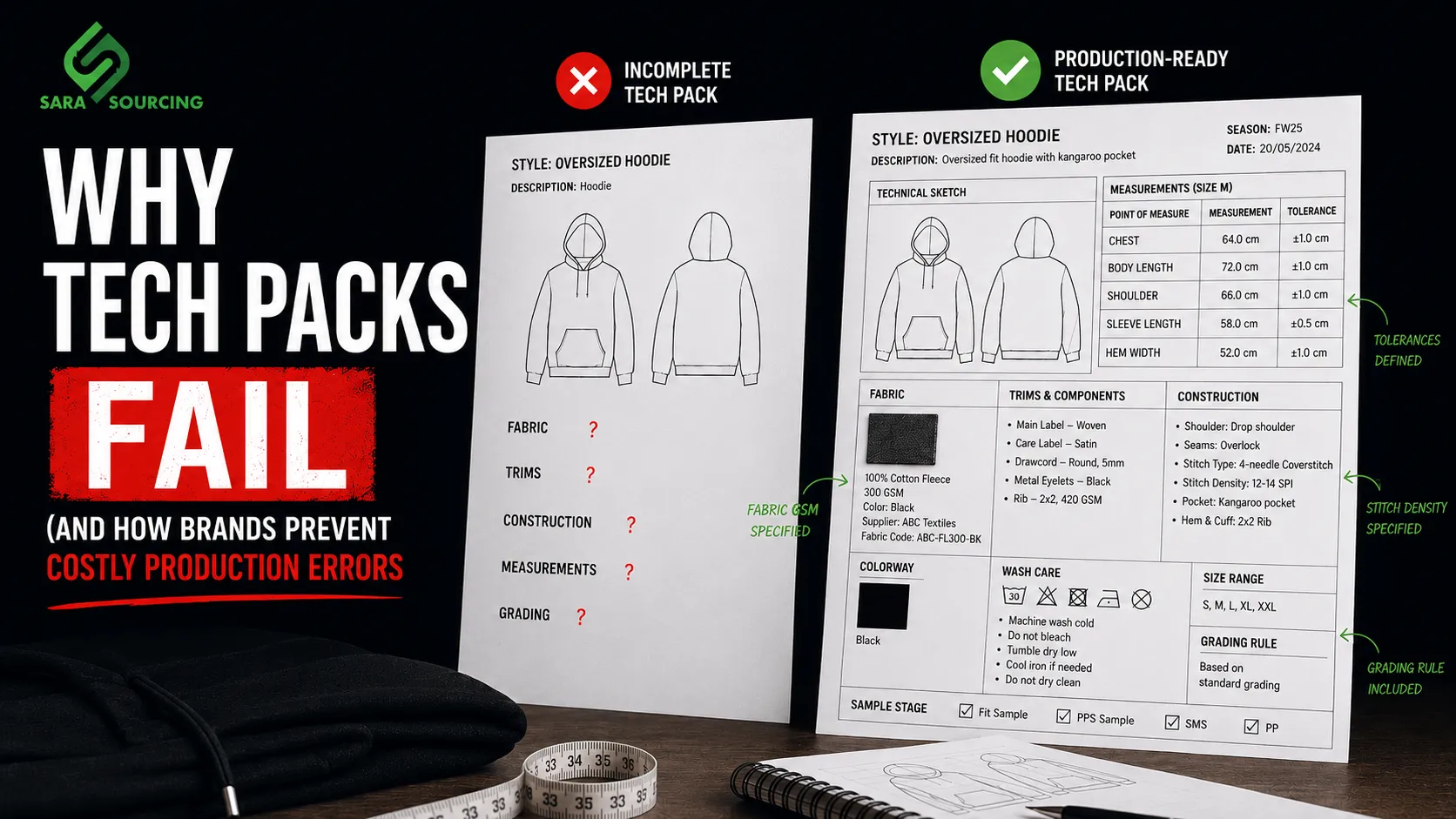
Before reaching out to any factory or sourcing partner, prepare a clear and thorough product brief. This should include a tech pack covering technical drawings and measurements, a fabric specification noting GSM weight, fibre content, and finish requirements, your expected order quantities, and your target timeline for samples and bulk production.
Without these details in place, factories cannot quote accurately. You risk spending weeks on back-and-forth communication that leads nowhere, and you lose negotiating power before the relationship has even begun.
Step 2: Choose the Right Sourcing Model
UK brands typically approach Bangladesh through one of two routes.
Direct factory sourcing means working with a manufacturer yourself. This can offer the lowest unit cost, but it requires significant time and expertise. Factory vetting, compliance audits, quality oversight, sampling management, and export documentation all fall on your team.
Working with a sourcing agent or buying house means partnering with an on-the-ground expert who manages the supply chain on your behalf. They handle factory selection, sample development, production monitoring, quality control, and shipping. For brands without a dedicated sourcing team, this is often the faster, more reliable, and ultimately more cost-effective model, particularly in the early stages of working with Bangladesh.
At Sara Sourcing Ltd., we serve as a full-service sourcing partner for UK and European brands. We manage the entire journey from initial brief and 3D design through to final delivery, so your team stays focused on product development, brand building, and sales.
Step 3: Vet Your Supplier or Sourcing Partner Thoroughly
This is the step most brands rush, and it is where the most expensive mistakes happen. Before committing to production, take the time to verify the following.
Certifications matter. Look for GOTS certification confirming organic textile standards, BSCI covering social compliance and ethical labour practices, OEKO-TEX confirming freedom from harmful chemicals, and ISO 9001 confirming quality management systems. These are not marketing badges. They confirm that the factory operates to verifiable international standards.
Ask for recent third-party audit reports, check compliance with the UK Modern Slavery Act, and assess the supplier’s communication quality. A factory that is slow to respond at the quoting stage rarely becomes more responsive once your order is in production.
Step 4: Always Sample Before You Scale
This step is non-negotiable, regardless of how trusted the supplier appears or how urgent your timeline feels. Always order a pre-production sample before placing a bulk order.
Evaluate the sample against your specification on fit, fabric hand-feel, stitching quality, colour accuracy, and wash performance. Request revisions where needed, and only give final approval when you are completely satisfied. What you approve in the sample stage is what will be reproduced across thousands of units in bulk.
One way to accelerate this process is through 3D virtual prototyping. At Sara Sourcing, we offer in-house 3D design capability that allows brands to review and refine garment designs digitally before a physical sample is even produced. This reduces the number of sampling rounds needed, lowers development costs, and can cut weeks off your production timeline.
Step 5: Lock Down the Commercial and Logistics Terms
Once your sample is approved, confirm all commercial terms before production begins. This includes the production lead time, which typically runs from 60 to 90 days for bulk knitwear from sample approval through to shipment. Confirm payment terms, with most Bangladesh factories working on a 30 percent deposit and 70 percent balance before shipment structure. Agree on Incoterms, with FOB being most common for UK brands, where the factory is responsible for delivery to the port of loading, and you arrange international freight from there. Finally, confirm your quality inspection plan, including whether inline, midline, and final AQL inspections will be conducted.
Minimum Order Quantities: What to Expect
MOQ is one of the most common questions from UK brands, especially those launching new styles or entering new categories.
Standard factory MOQs in Bangladesh typically start at 500 to 1,000 pieces per style. However, sourcing partners who manage multiple brands can consolidate orders and negotiate lower minimums on your behalf.
At Sara Sourcing Ltd., our Starter package begins from just 50 to 200 pieces per style, making it practical for brands that are testing new products or entering the market for the first time. As your volume grows, our Growth and Premium packages offer increasing levels of sampling support, compliance coverage, and production capacity to match your ambitions.
Common Mistakes UK Brands Make When Sourcing Knitwear from Bangladesh
Skipping the factory audit. A low unit price from an unvetted supplier can result in far greater costs through quality failures, missed shipments, or compliance violations that damage your brand’s reputation with customers and retail partners.
Under-specifying fabric. A hoodie listed simply as “fleece” without a GSM weight could arrive at 240g or 380g. These are fundamentally different products. Always specify fabric weight, fibre composition, and finish with precision.
Underestimating the timeline. Many brands plan their buying calendar assuming 45-day production. The realistic timeline, including sampling revisions, bulk production, quality inspection, and shipping to the UK, is typically 90 to 120 days. Build this into your planning from the start.
Neglecting intellectual property protection. Your designs, branding, and technical packs are valuable assets. Ensure your sourcing agreement includes clear IP ownership clauses before sharing any materials with a factory or agent.
Why UK Brands Choose Sara Sourcing Ltd.
Sara Sourcing Ltd. has been helping brands source premium knitwear and apparel from Bangladesh since 2013. With a network of over 70 vetted and certified partner factories, an in-house 3D design studio, and dedicated quality control and merchandising teams, we give UK brands the infrastructure of a large sourcing operation without the overhead of building one themselves.
Our factory network is aligned to GOTS, BSCI, OEKO-TEX, and ISO 9001 standards. Minimum orders start from just 100 pieces. Samples are typically ready within two to three weeks. And our team manages every stage of the process, from the initial brief right through to delivery at your warehouse.
If you are ready to source knitwear from Bangladesh with a partner you can trust, we would love to hear from you.
Book a free discovery call with our sourcing team today, or download our company profile to learn more about how we work.
Sara Sourcing Ltd. is a premium apparel sourcing company based in Bangladesh, serving brands across the UK and Europe since 2013. We specialize in knitwear, activewear, outerwear, and more, with ethical, certified, and transparent supply chains built for modern brands.