

clothing brand owner with supplierChoosing the right apparel supplier for your brand is one of the most important decisions in the global fashion business. Your product quality, delivery time, and customer satisfaction all depend on working with a reliable apparel supplier for your brand. Even if your design and marketing are strong, the wrong supplier can cause delays, quality problems, and unexpected costs that damage your brand reputation.
Selecting an apparel supplier for your brand is not just about manufacturing garments. It is about building a long-term partnership that supports product development, sourcing, quality control, and shipment. Many international buyers work with professional sourcing companies like Sara Sourcing Ltd to find the right apparel supplier for their brand and ensure smooth production from start to finish.
This guide explains how to choose the best apparel supplier for your brand step by step.
1. Define Your Brand’s Exact Requirements
Before you begin your search, you must have a clear understanding of your own needs. Many companies fail because they contact factories without knowing their production details, leading to wrong pricing and delays.
Key Factors to Identify:
- Product Category: Are you focusing on knitwear (T-shirts, hoodies), woven (shirts, chinos), or specialized items like denim and sportswear?
- Fabric Composition: Will you use 100% organic cotton, recycled polyester, or luxury blends?
- Target Price Point: Knowing your “Land Cost” is essential to maintaining your profit margins.
- Minimum Order Quantity (MOQ): Startups often need low MOQs, while established brands look for high-volume capacity.
Different factories specialize in different niches. A factory that excels in fast-fashion jersey items may struggle with high-end outerwear. To choose the right apparel supplier, you must align your product type with the factory’s core expertise.
2. Decide Between Domestic and Overseas Manufacturing
This is a pivotal decision for any clothing brand. In 2026, the choice often comes down to speed versus scale.
Domestic Manufacturing
- Pros: Faster turnaround, easier site visits, and no customs duties.
- Cons: Extremely high labor costs and limited raw material variety.
Overseas Manufacturing (The Bangladesh Advantage)
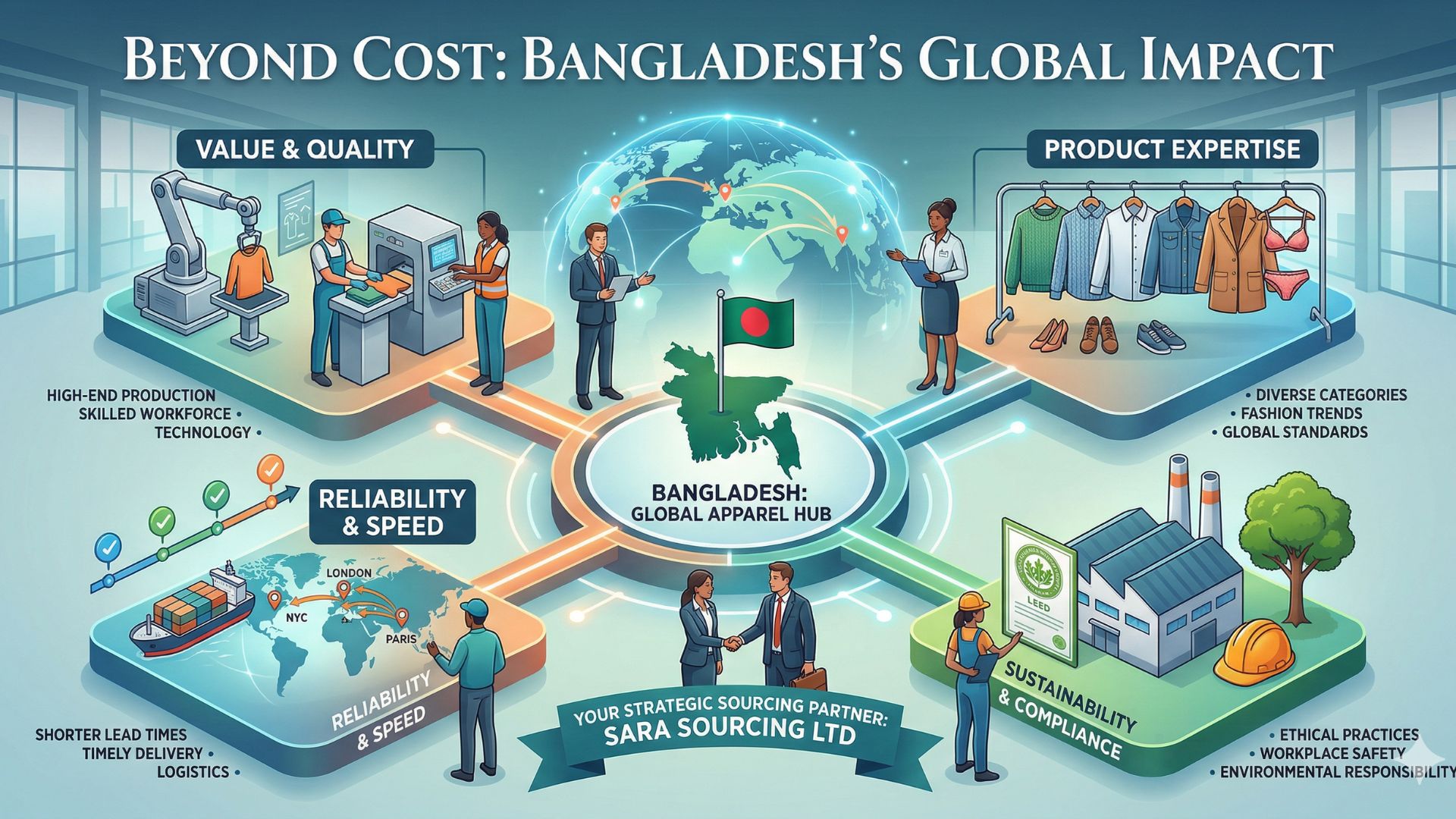
Bangladesh has solidified its position as the world’s leading apparel hub. With massive investments in Green Factories and sustainable technology, it is the go-to destination for brands seeking high quality at a competitive price.
- Pros: Lower production costs, vertical integration, and massive scalability.
- The Sourcing Angle: Working with a local partner on the ground helps solve common challenges like logistics and cultural barriers.
3. Check the Quality Assurance (QA) System
Quality is non-negotiable. A “cheap” garment that falls apart is the most expensive mistake a brand can make. When you choose the right apparel supplier, verify that they follow a rigorous Standard Operating Procedure (SOP).
The 4-Point Quality Check:
- Raw Material Inspection: Checking fabric and trims before the machines start.
- In-Line Inspection: Checking garments at the sewing stage to catch mistakes early.
- End-of-Line Inspection: A check after the garment is fully assembled but before packing.
- Final Random Inspection (FRI): Using AQL (Acceptable Quality Level) standards to ensure the shipment is ready.
4. Prioritize Ethical and Social Compliance
In 2026, transparency is a requirement, not an option. Consumers are increasingly demanding to know who made their clothes and under what conditions.
Mandatory Certifications to Look For:
- BSCI / SEDEX: Ensures fair wages and safe working hours.
- WRAP: Focuses on lawful, humane, and ethical manufacturing.
- GOTS / OEKO-TEX: Guarantees that fabrics are organic and free from harmful chemicals.
Partnering with suppliers who prioritize ESG (Environmental, Social, and Governance) goals protects your brand from PR scandals and legal issues. It is a critical step to choose the right apparel supplier that values human rights.
5. Evaluate Communication and Transparency
A supplier who doesn’t reply to emails for days is a major red flag. In the modern era, you need real-time data and transparency.
- Problem Solving: A good partner doesn’t just report problems; they offer solutions.
- Digital Updates: Does the supplier provide regular production status reports?
- Language Barrier: Ensure there is a dedicated team that understands your market’s quality expectations.
6. Check Production Capacity and Flexibility
Your supplier should be able to grow with you. If your brand goes viral, can the factory handle the surge?
- Monthly Capacity: Can they handle your peak season orders?
- Lead Times: Understand how long it takes from order placement to shipment (typically 60-90 days for overseas).
- Flexibility: Check if they can handle small batch production for testing new designs.
7. Understand the Sampling Process
Sampling is the stage where most mistakes are caught. Never move to bulk production without a “Golden Sample.” To choose the right apparel supplier, you must ensure they follow these steps:
- Proto Sample: To check the initial design and fit.
- Size Set: To ensure the fit is consistent across all sizes.
- Salesman Sample (SMS): High-quality samples for marketing and photography.
- Pre-Production (PP) Sample: The final approved version that stays at the factory as a reference.
8. Compare Value, Not Just Price
Many brands choose the lowest bidder, only to find that the fabric shrinks or colors bleed.
- Hidden Costs: Low unit prices often hide costs in shipping, rework, or lost sales due to delays.
- Consistency: A slightly higher price often guarantees a dedicated QC team and better raw materials. In the apparel industry, the cheapest option often becomes the most expensive mistake.
9. Why a Sourcing Agency is a Strategic Move
Dealing directly with factories thousands of miles away is difficult for small to mid-sized brands. A sourcing agency acts as your local office.
- Vetted Networks: They already know which factories are reliable and compliant.
- Price Negotiation: Local experts have the leverage to get better rates.
- On-Site Presence: Having someone physically present in the factory during your production is the best way to prevent errors. This helps you choose the right apparel supplier with zero stress.
10. Build a Long-Term Partnership
Successful brands don’t jump from factory to factory. They find a reliable partner and grow together. A long-term relationship leads to:
- Priority in the production queue during peak seasons.
- Better credit terms and payment flexibility.
- Continuous improvement in product quality as the factory learns your brand’s specific “DNA.”
Conclusion: Take the Next Step for Your Brand
Choosing the right apparel supplier is the foundation of your business success. By checking experience, quality control, and compliance, you can build a brand that customers trust and love.
Ready to start your production journey? Sara Sourcing Ltd. provides professional apparel sourcing, quality control, and export support from Bangladesh, helping global brands produce with total confidence. When you choose the right apparel supplier, your production becomes easier, your risk is lower, and your brand is stronger. When it comes to final export, the right partner ensures your vision reaches the customer exactly as intended.