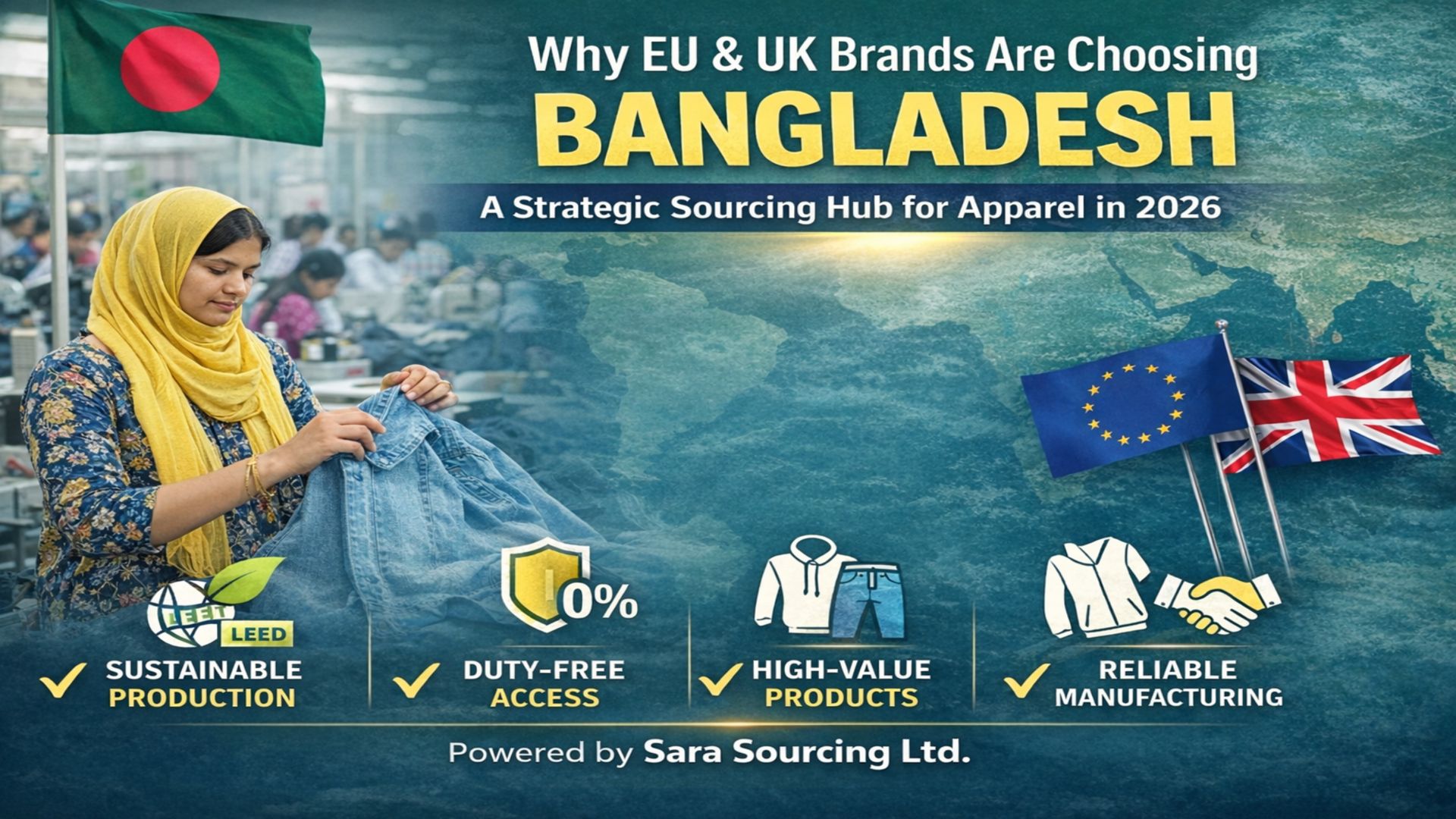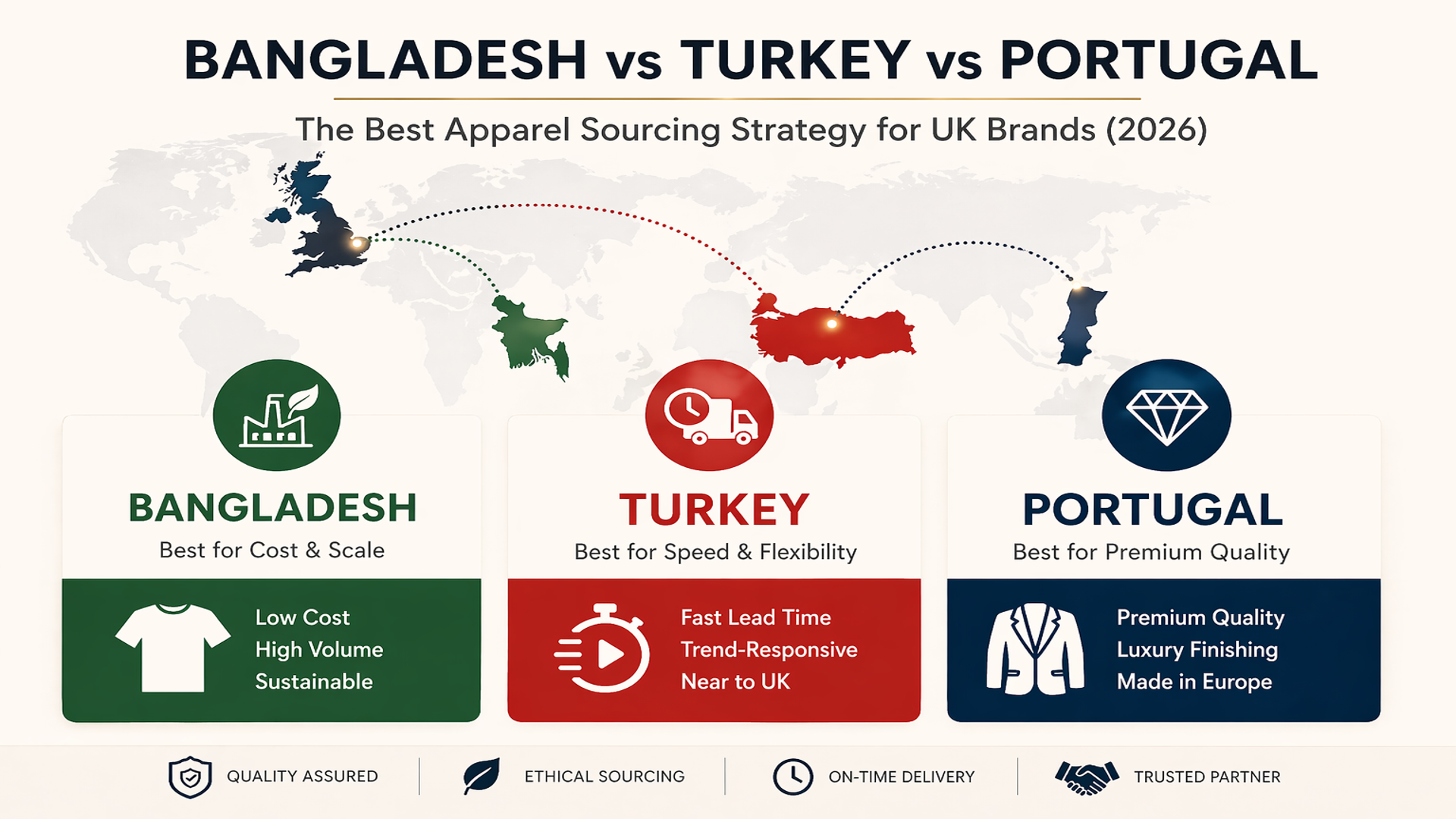

The global textile and apparel industry is undergoing a major transformation. What was once driven by low cost and large-scale production is now being reshaped by technology, sustainability, and shifting global trade dynamics.
For Bangladesh, one of the world’s largest garment exporters, 2026 is a turning point. With the country graduating from its Least Developed Country (LDC) status and facing increasing global competition, the industry must evolve.
The future is no longer about being the cheapest manufacturer. It is about becoming a reliable, innovative, and value-driven sourcing partner.
At Sara Sourcing Ltd., we see this transition as an opportunity to deliver smarter, more efficient, and more transparent sourcing solutions for global buyers.
Bangladesh’s Strength: A Strong Foundation
Over the past three decades, Bangladesh has built a solid position in the global apparel market. The country is known for:
- High production capacity
- A large and experienced workforce
- Competitive pricing
- Strong export performance
These strengths have made Bangladesh a preferred destination for global brands.
However, buyer expectations are changing. Today, brands are not only looking for cost efficiency, but they are also looking for:
- Faster lead times
- Consistent product quality
- Transparency in production
- Sustainable manufacturing practices
This shift is pushing the industry to move from volume-driven production to value-driven sourcing.
The Role of Technology in Modern Manufacturing
Technology is transforming how garments are designed, produced, and delivered.
Faster Sampling and Product Development
Traditional sampling processes were slow and resource-intensive. Today, digital tools and 3D design systems allow manufacturers to:
- Create virtual samples quickly
- Reduce dependency on physical prototypes
- Speed up buyer approvals
This significantly shortens lead times and improves efficiency.
Improved Quality Control
Modern production lines are increasingly supported by advanced monitoring systems. These tools help identify defects early, ensuring better consistency and reducing costly errors.
Smarter Decision Making
With access to real-time data and trend insights, sourcing partners can guide buyers more effectively, helping them make informed decisions about materials, designs, and production timelines.
LDC Graduation: Navigating the Economic Milestone
The year 2026 marks Bangladesh’s official graduation from the LDC category. While this is a proud moment of economic maturity, it removes the “Safety Net” of the Generalized System of Preferences (GSP).
The Challenge of Tariffs
Post-graduation, exports to the EU, UK, and other major markets could face tariffs ranging from 9% to 12%. To offset these costs, the industry is forced to improve Operational Efficiency.
- The Opportunity: By reducing waste through AI and improving logistics, the 10% tariff “hit” can be absorbed without raising prices.
- Strategic Sourcing: SaRa Sourcing Ltd. mitigates this risk by partnering with efficient suppliers such as Daylight Apparel Ltd., whose lean manufacturing processes keep production costs optimized amid a changing trade landscape.
Sustainability: A Business Requirement
Sustainability is no longer optional in the global apparel industry; it is a requirement.
Changing Global Expectations
Buyers now expect:
- Environmentally responsible production
- Ethical labor practices
- Full transparency across the supply chain
Bangladesh’s Progress
Bangladesh has already made significant progress in sustainable manufacturing, with a large number of green factories and improved compliance standards.
The Next Step: Circular Production
The future lies in reducing waste and reusing resources. This includes:
- Recycling textile materials
- Minimizing environmental impact
- Adopting more efficient production methods
These initiatives not only support the environment but also create new business opportunities.
Workforce Transformation: Preparing for the Future
The industry is also undergoing a shift in workforce requirements.
Impact of Automation
Automation is improving efficiency but also changing the nature of work on the production floor.
Focus on Skill Development
To stay competitive, the workforce must adapt through:
- Technical training
- Digital literacy
- Machine operation skills
A skilled and adaptable workforce will be key to maintaining Bangladesh’s competitive edge.
Diversification: Expanding Beyond Basics
Bangladesh has traditionally focused on basic cotton garments. However, global demand is evolving.
Growing Demand for Man-Made Fibers
Products made from polyester, nylon, and other performance fabrics are becoming more popular.
New Product Opportunities
The industry is expanding into:
- Sportswear
- Technical garments
- Medical and protective apparel
These segments offer higher value and open doors to new markets.
Global Sourcing Shift: The China Plus One Strategy
Global brands are increasingly diversifying their sourcing strategies.
Why This Shift Is Happening
- Rising costs in China
- Supply chain risks
- Geopolitical uncertainties
Bangladesh’s Opportunity
Bangladesh is well-positioned to benefit from this shift due to its scale, experience, and infrastructure.
However, to remain competitive, the industry must continue improving:
- Lead times
- Logistics efficiency
- Product quality
The Importance of Strategic Sourcing Partners
In today’s complex sourcing environment, buyers need more than just manufacturers; they need reliable partners.
Sara Sourcing Ltd. provides:
- Supplier identification and negotiation
- Production monitoring
- Quality control and inspection
- Shipment coordination
By managing the entire process, Sara Sourcing ensures:
- Consistency
- Transparency
- On-time delivery
This allows buyers to focus on growing their business while we handle the operational complexity.
Conclusion: The Future of Bangladesh Apparel Sourcing
The global textile industry is changing, and Bangladesh is at the center of this transformation.
While challenges such as tariffs, competition, and technological disruption remain, the opportunities are even greater.
By embracing:
- Technology
- Sustainability
- Skilled workforce development
- Strategic sourcing
Bangladesh can move beyond being a manufacturing hub and become a global leader in apparel sourcing.
Sara Sourcing Ltd. is committed to supporting this journey, delivering reliable, efficient, and forward-thinking solutions to global partners.
Call to Action
Looking for a trusted sourcing partner in Bangladesh?
Get in touch with Sara Sourcing Ltd. to streamline your supply chain and grow your apparel business with confidence.